

William was born in Bramford in 1921 and was the son of Percy and Bessie Hayes of 2 Works Lane [Paper Mill Lane] Bramford.
William was named after two of his uncles that had died in the First World War.
He died on 29th November 1943 and is commemorated on the Singapore Memorial.
William was part of RAF units sent initially to Singapore in 1942 but diverted to Sumatra and later Java. Captured on the 8 March 1942 March according to contemporary documents], when the Japanese invaded the islands after Singapore surrendered. He was imprisoned at Ambon and PoWs here, like their counterparts, in Burma were used as slave labour helping to construct airfields and other defences for the Japanese. As in Burma they were subject to appalling cruelty and privation and many suffered from diseases such as dysentery, beriberi and malaria.
By November 1943 the work on the airfields was complete and it was decided to move the prisoners back to Java. Over 600 men, malnourished and many too sick to walk were put aboard the SS Suez Maru – a Japanese cargo ship. Among the men was a large number of sick Japanese. Suez Maru sailed on 25 November 1943 with 548 POWs (415 British and 133 Dutch) from Ambon bound for Surabaya. The POWs were all sick men from the work-camps on the Moluccas and Ambon. Twenty men were on stretchers. There were also several hundreds of sick and wounded Japanese soldiers on board.
On 29 November 1943, near Kangean Island east of Madoera Island, the ship was torpedoed by USS Bonefish, unaware of the presence of Allied POWs. Many of the POWs drowned in the holds of the ship, but between 200 and 250 escaped from the holds and jumped into the water. Minesweeper W.12 only picked up the Japanese survivors. Then Captain Kawano Usumu, commander of W-12 , decided that his ship could not carry any more survivors and ordered Lt. Koshio to machine-gun all surviving POWs in the water. All were killed. There were also some 69 Japanese casualties which went down with Suez Maru. A memorial to the 414 British POW’s aboard the Suez Maru, who were murdered by the Japanese was dedicated on 29 November 2013 at the National Memorial Arboretum, Alrewas, Staffs.
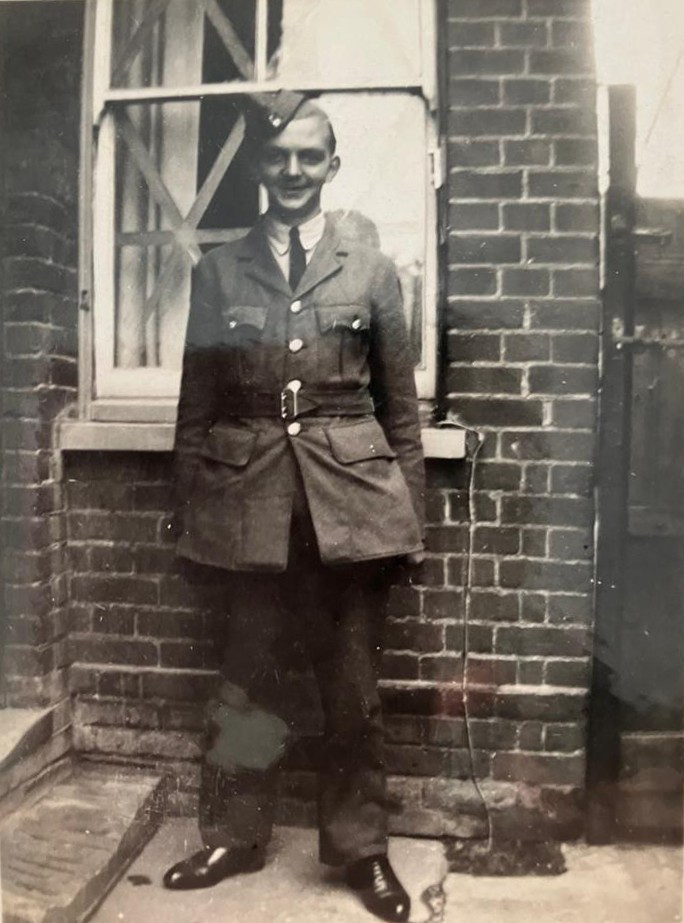
William John Hayes in uniform outside 7 Paper Mill Lane
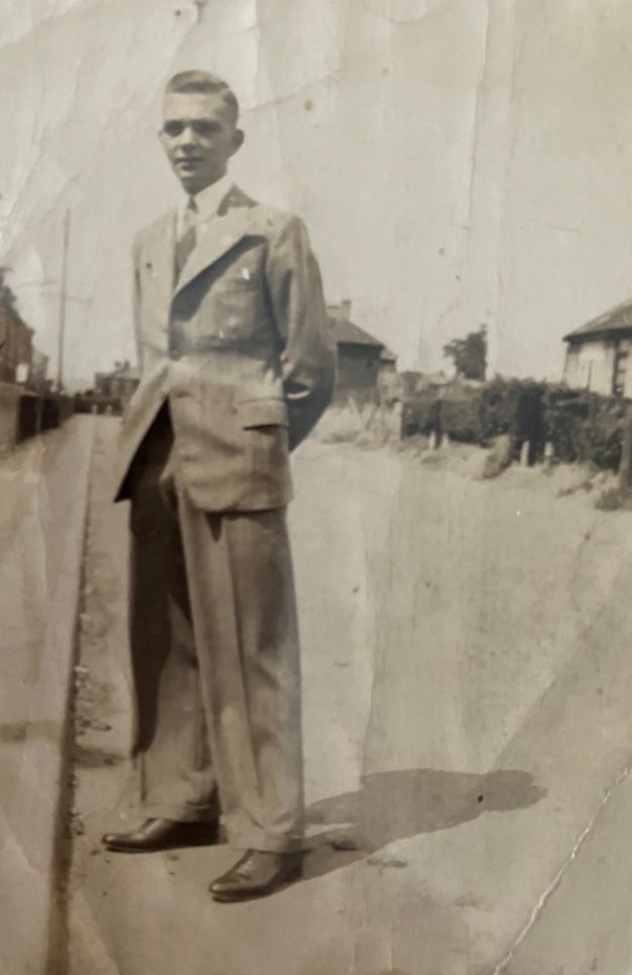
William John Hayes outside 7 Paper Mill Lane
A personal note from Wendy Prigg – William’s niece
On 29th November, 1943, 548 Prisoners of War (415 British and 133 Dutch) lost their lives in the Pacific Ocean. These men, all desperately sick, emaciated and starving, were aboard the Suez Maru, being transported from the work camps of Moluccas and Ambon in Indonesia to Surabaya in Java. About 200 Wounded Japanese servicemen were also on board.
One of the prisoners was my uncle, William John Hayes, son of Percy and Bessie Hayes of Works (now Paper Mill) Lane, Bramford. Bill was an Aircraftman in the RAF Volunteer Reserve. He was just twenty-two years old, an apprentice butcher at Bales’s (now the pharmacy) in the Street, and engaged to a local girl.
The Suez Maru bore no Red Cross to indicate that it was carrying Prisoners of War, and it was torpedoed by the US submarine, Bonefish. As the ship sank, about half the prisoners drowned, locked in their holds and therefore unable to escape. The remainder jumped into the ocean, hoping to be picked up. However, the Japanese minesweeper, Number 12, which arrived four hours later, rescued only the Japanese. Every last one of the British and Dutch Prisoners of War who had managed to jump into the water was shot or machine-gunned to death. Not one man survived.
Eighty years later to the day, 29th November, 2023, my cousin, Jane Cantwell (née Hayes), and I attended a Service of Remembrance at the National Memorial Arboretum in Staffordshire for the men who died when the Suez Maru went down. This tribute was a labour of love organised by Jacqueline Frith, whose uncle was one of the 415 lost British prisoners. The day was cold but lit by November sun. We gathered outside, around the Suez Maru memorial erected ten years ago, families from all over the world. We laid poppy crosses with words of love to show that these prisoners are not forgotten. Every member of the congregation who was able to do so stood for forty minutes, whilst the name of each man who died was read out, all of us contemplating the life these young men should have had, but which was cut short by an unimaginably cruel regime.
Jacqueline herself captured the powerful inhumanity of the Suez Maru tragedy in the Order of Service which she prepared: “The Suez Maru massacre is a little-known war crime. In fact, it is one of the worst untried war crimes of World War II. It is a harrowing true story of murder, cover-ups, political cowardice and concealment of the facts from the families of the men murdered. Complicit in this war crime were not only the Japanese perpetrators but the very government of the majority of the men killed. Eighty years later, this same government continues to hide behind arbitrary dates, blame-shifting and a continuing misplaced fear of criticism.”
Wendy Prigg.
Hello, My name is Jaquelyn Frith, and my great uncle Jack was killed on the Suez Maru, aged just 23. I have written a book about it, and I arranged and built the Suez Maru Memorial with the support of other Suez Maru families, as we have a group on Facebook. (search @suezmaru on fb) I actively try to find ‘Suez Maru families’ as this is a wound that has been passed down the generations. I campaign for an apology and organise gatherings at the memorial at the NMA each 29 November, this year (2023) being the 80th anniversary and ten years since we built it. If you’d like to join the group and add a photo of William, you’ll see there’s a growing gallery of the men. We will always remember them thanks
I always understood as a child the revelance of my Gran having Uncle Williams photo as you depict, on a table near to her chair and what ever season a vase with fresh flowers.
Just reading this by chance while exploring another aspect of my Bramford childhood has brought an increased sense of pride of being a Hayes sibling..
Indeed there is Just 2 Bramford Hayes girls left.
My Dear Aunty Rita and myself Jane.
Jacquelyn I will consider your quest. Regards Jane
Hello Jane,
Im so glad you replied, your story is familiar, in the sense that all our families did different things to remember them. One of the other familes said that the mother of one of the men lost, used to leave out a piece of fruit on the mantlepiece every day for him. I find these things very touching, as they were so missed, and the information (at the time) was so scant. My great grandparents received only a 76 word letter from the war office, and nothing whatsoever else to tell them what happened. I have posted this letter, and various many documents on the Suez Maru page, and I will have other documents for your uncle William, just drop me a message, and I can send them.
Please dont feel you have to ‘join’ anything, by havign a look at the Suez Maru family page.
https://www.facebook.com/SuezMaru
I am hoping that one day, I will have made contact with a family member or representative of all 414 British men lost that day, and we are about 200 or so at the moment. Do have a look, you do not have to do anything or contribute etc, I am not a company, just a mum trying to remember all of them and raise awareness of this terrible unpunished war crime.
very best
Jacquelyn
Goodmorning Jacquelyn,
just to say I am sitting hear on Easter Sunday having simply highlighted the areas mentioned in the detail of Uncle Bill journey , on a map of those areas to gain a perspective.
Its a start and I will be intouch.
Kind regards
jane
Just by gaining an insight of my Uncle Bills youth , him proudly leaving Bramford Village undertaking his posting as Leading Aircraftsman 1235829 to Areas of Singapore,
Sumatra, Java as many youths did. Then becoming a POW at Ambon.
Jacquelyn Frith kindly forwarded me photos of the Japanese (translated)basic record of the uncle I never got to know .
The detail of which I hope can be uploaded to this comment as a further Bramford History Record.
I am going to visit Singapore .
My dear Aunt and I take great comfort of her son having visited The Kranji War memorial and in her words I will be doing so in October for The Bramford Hayes family.
I know I will never be able to comprehend how Uncle Bill coped with the horrors as a Japanese POW and some 18 months of not knowing if the morning will come or the next day .
However just maybe at some stage within the area of Singapore Uncle Bills mind and body found a kind of peace in death, but so sadly alone away from Bramford and his family.
The family know I am going to sit at Uncle Bills Pillar and tell him how the Hayes family turned out. From 1942 to 2023
I do not have any connection but singled out from the Bramford WW2 data you produced on this site that Edgar Seeley and Clifford Green have a dedicated Pillar so will go and say hello to them.
I have scheduled to visit the Changi prison museum and if I locate it Braddell Road in Singapore which has some significance to Edgar and Clifford.
I look forward to being able to give a comment or photo again to this site following my visit and of Jacquelyn Frith-Crofts quest of remembering the 80th Anniversary Suez Maru at the National Memorial Arboretum 29th Nov 2023.
On 5th October 2023 I did visit my Uncle Bills Kranji War Memorial Singapore.
Having walked the distance from the rail station and crossing a 6 lane traffic junction , fully believing I was lost. I spotted some fields and walked on ,then on turning a bend I was greeted by the site.
Despite the noisy crickets and birds song there was an air of peace perfect peace .
The position of Uncle Bills engraving on the wall, meant that his name sees the sun rise and the sun set.
A memory now set in my mind forever.