
Fisons North Warehouse

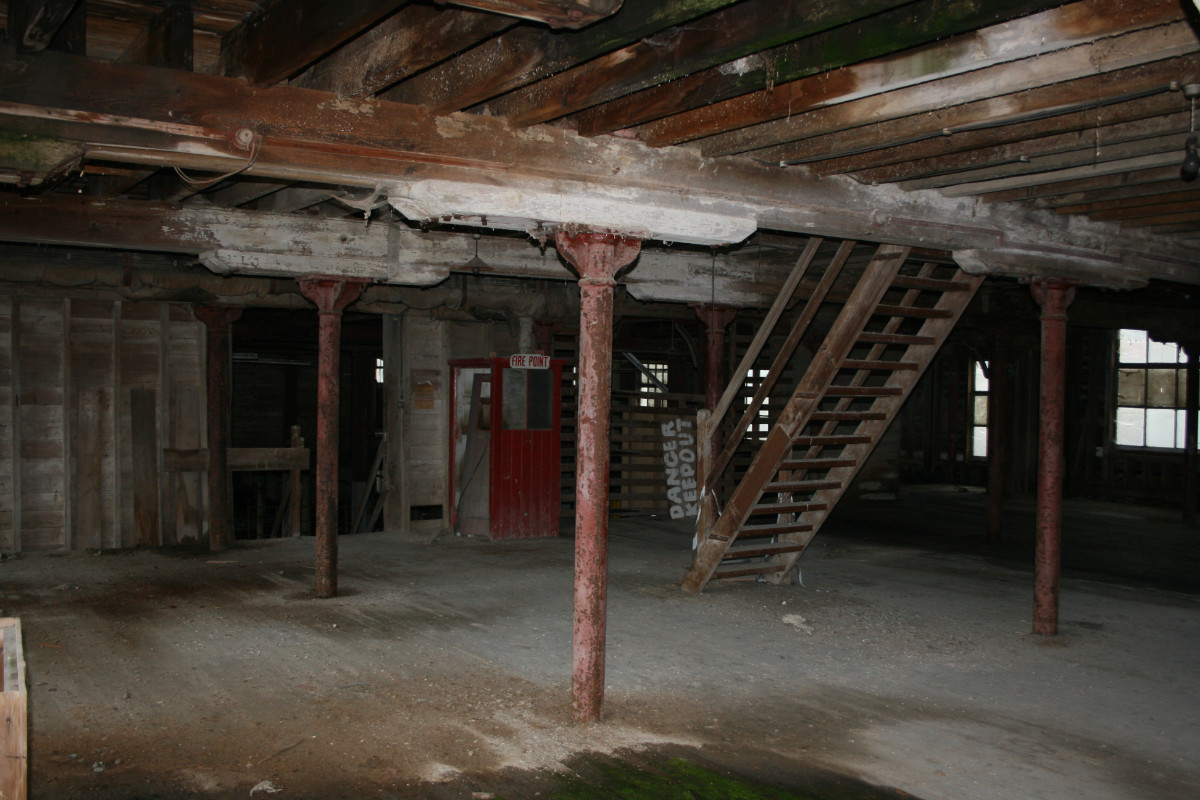
Royal Agricultural Society Show – Bury St Edmunds – 15th to 19th July 1867
An extract from an extensive report in the Suffolk Chronicle, 19th July 1867, gives a detailed description of the newly constructed Joseph Fison’s Eastern Union Chemical Works (or North Warehouse as it later became known):
THE IMPLEMENT DEPARTMENT.
Among the line of shedding on the right-hand side as we enter, at stand 202, we find a well arranged exhibition of artificial manures from the manufactory of Mr. Joseph Fison, at Bramford. No one who travels by rail between Ipswich and Bury or Norwich can fail to observe the newly erected chemical works of Mr. Fison, close by the line at a short distance on the Bury side of Bramford station. When we say the buildings are newly erected, it must not be supposed that we mean Mr. Fison has only recently embarked in the business, for he has for some years been known as one of the principal manufacturers of those chemical manures without which farmers could not, now-a-days, get on. It is unnecessary here to dilate on the advantages resulting from the use of artificial manures but we may state that an estimate has been carefully made by Mr. Fison, of the annual increase in the value of corn and meat produced in Suffolk resulting from their application.
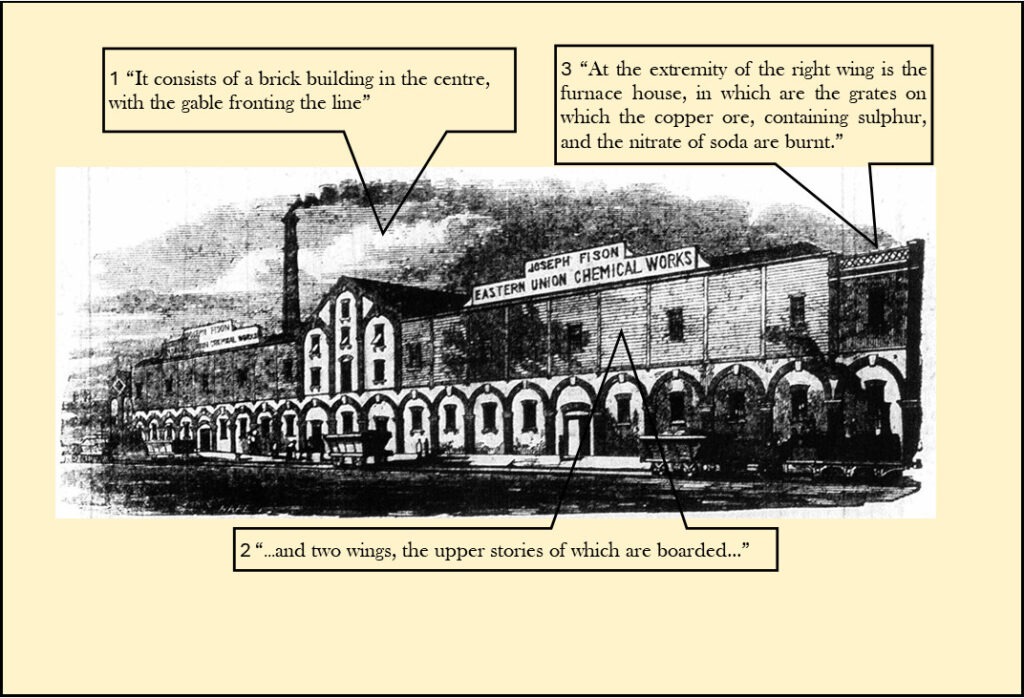
This estimate is that the value of the wheat, barley, meat, and wool produced every year in Suffolk exceeds by 114,000l. the value of the corn and meat produced some 20 years ago, before artificial manures were brought into requisition. We should suppose that Mr. Fison does not assume that the whole increase is due to artificial manures, some part no doubt arising from improvements of other descriptions which have been introduced, but a great portion is attributable to the application of chemical manures, which have supplied to the soil the matters required by the crops. Mr. Fison’s business gradually extended until his original factory at Ipswich became totally inadequate to supply the demand for the article manufactured—hence the erection, in the course of last year, of the works which form a new and important member of the colony of manufactories which within a few years has sprung up at Bramford. The works being so lately erected, it is only natural that we should expect to find everything conducted on the latest and most improved system, and that expectation is in no way disappointed. We have within the last week described the mode of manufacture of artificial manure and it is therefore unnecessary to enter at length into details. The front presented by Mr. Fison’s works to the railway is of great extent, and more handsome in style than is the case with most factories of the kind. It consists of a brick building in the centre, with the gable fronting the line (note 1 image below), and two wings, the upper stories of which are boarded (note 2 image below) and contain the vast leaden tanks in which the sulphuric acid is condensed. At the extremity of the right wing is the furnace house (note 3 image below), in which are the grates on which the copper ore, containing sulphur, and the nitrate of soda are burnt. The fumes arising from the combustion of these pass to the series of leaden chambers in which the sulphuric acid is condensed, the last remains being extracted as the fumes pass through two lead cylinders filled with coke whence they pass from the chimney into the air. The sulphuric acid thus produced is, some of it, used in the manufacture of manure, and this portion in conveyed to the mixing room in the brick erection in the centre of the building, the remainder being further purified and concentrated in another department till it becomes the oil of vitriol of commerce.
Into the mixing room the ground coprolites and bones are also introduced in the proper proportions, and when the acid and phosphatic material have been thoroughly mixed in a tank they are suffered to descend to a chamber below where they dry in the course of a day or two.
Ammonia is afterwards added in proportions varying according to the crops for which the manure is intended, and the manufactured articles dispatched to the customers.
The burnt ore which remains after the sulphur has been extracted is sent off to the copper smelting furnaces in other parts of the kingdom. The trade, therefore, is not altogether local; the bulk of raw materials both received and sent away is large, and it is necessary in order to retain the manufacture in this locality that the makers should be dealt liberally with by those who carry their goods. The object of the manufacturer is to find a spot where the cost of carriage is moderate, and it is with much regret that we learn that the Great Eastern Company are pursuing a short-sighted policy, and have just raised the rates of charge for transport to such an extent that it has really become questionable whether the district will not lose the advantages derived from the extensive manufacture now carried on at Bramford. It would be a serious blow Ipswich and the neighbourhood if the makers should find, from the high rates charged by the Railway Company, that they are compelled to seek some more favoured locality to carry on their operation (note 4 below).
Mr Fison’s stand, from which we have somewhat digressed has specimens of many of the numerous ingredients used in the manufacture of chemical manures, and of the manures themselves in different stages of manufacture. There are manures for wheat, barley, oats, rye, beans, tares and clover layers, mangold wurtzel, turnips, flax, cole wort, &c. Peruvian Guano, sulphuric acid &c, and specimens of the coprolite of Suffolk, Cambridgeshire and elsewhere, and of fossilized bones found with coprolites. Altogether it is an interesting and well-arranged collection, and gives a good idea of the ingredients used in order to make these valuable fertilisers.
Footnotes:
Notes 1,2 and 3 are shown here using an illustration of the building from an 1869 advertisement.
Note 4. This is the reason that in 1868 Edward Packard launched his Steam Barge – the Orwell – to transport raw material and products to and from Ipswich Dock. It has not been determined how much, if at all, any of the companies used barge transport up to that date.
Despite age deterioration then the fire , so pleased photgraphs depict what was and related information.